Three Steps. Under Ten Minutes.
A nosebleed is scary mostly because nobody tells you what to do. Here is exactly what to do, in order, with the kit or without it.
Nosebleed Happens → Open Stop A Drop → Back to the Action
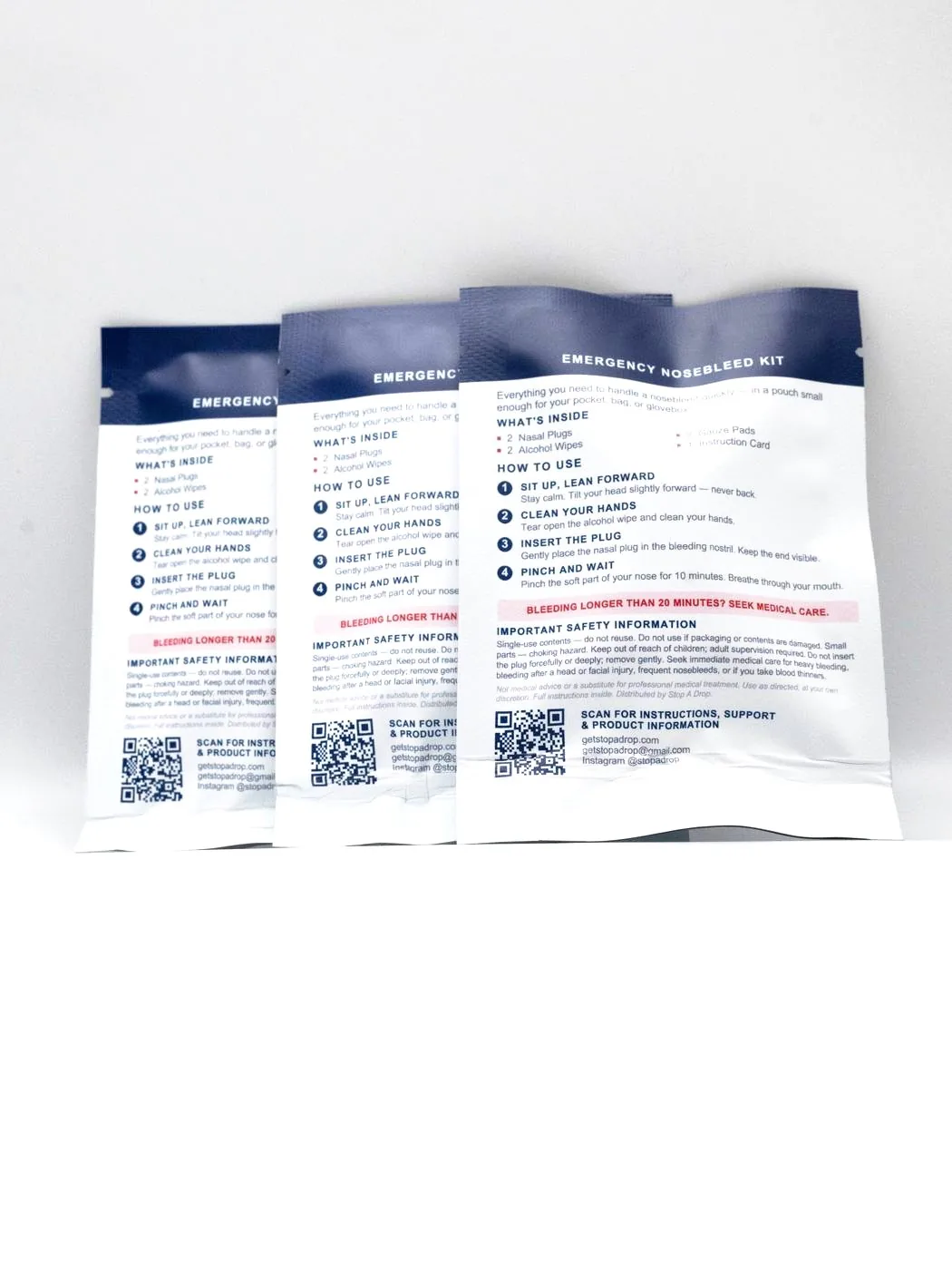
Every step below is also printed on the back of the pouch, so you never have to remember it under pressure.
Sit up, lean forward, tear it open
Sit upright and lean slightly forward so blood drains out the front instead of down your throat. Don't tilt your head back. Tear the pouch open at the notch — no scissors, no fumbling.
Wipe, then plug the nostril
Use an alcohol wipe on your hands and around the nose. Gently insert one nasal plug into the bleeding nostril (or fold a gauze pad and press it in). The plug soaks up blood and gives the clot something to form against.
Pinch for 10 minutes, then check
Pinch the soft part of your nose just below the bone and hold for 10 full minutes without peeking. Breathe through your mouth. Release, check, and use the second gauze pad to clean up. Back to the run, the game, or the meeting.
How to Stop a Nosebleed (Step by Step)
Most nosebleeds come from the small blood vessels in the front of the nose — the ones that dry out on a plane, crack in cold mountain air, or get bumped in a game. They look dramatic but they are usually easy to stop if you do the same few things every time.
Stay calm and sit upright
Sitting up lowers the blood pressure in the vessels of your nose, which slows the bleeding. Don't lie down, and don't lean your head back — that just sends blood down your throat, which can make you feel sick.
Lean slightly forward
Let the blood come out the front. Have a gauze pad, tissue, or your sleeve ready to catch it. If you're helping a kid, get down to their level and tell them what you're doing before you do it.
Pack the nostril if you can
A nasal plug or a folded piece of sterile gauze pushed gently into the bleeding side absorbs blood and helps a clot form. Skip loose tissue or toilet paper — it sticks to the clot and rips it open when you pull it out.
Pinch the soft part of your nose
Use your thumb and index finger to squeeze the fleshy part of the nose, just below the hard bridge. Pinching the bone at the top does nothing — the bleeding is lower down. Squeeze firmly enough that no air passes through your nose.
Hold for 10 full minutes — time it
This is the step everyone gets wrong. People pinch for 30 seconds, peek, see blood, and panic. The clot needs about 10 uninterrupted minutes. Set a timer on your phone and breathe through your mouth.
Release and check
Let go gently. If it has stopped, don't blow your nose, bend over, or do anything strenuous for 30 minutes or so. If it's still going, pinch again for another 10 minutes. Two rounds stops the large majority of everyday nosebleeds.
Clean up and remove the plug slowly
Use an alcohol wipe on your hands and face. If you used a plug or gauze, leave it in for a while, then ease it out slowly — pulling fast can restart the bleed. A little dab of petroleum jelly inside the nostril later that day helps the area stay moist.
Why they happen in the first place
Dry air is the big one — heated cabins, airplane air, and cold, thin mountain air all dry out the lining of the nose until it cracks. Add nose-picking, a bump on the slopes, allergies, a cold, or a high-altitude day and the vessels in the front of the nose open up. Kids and teenagers get them more often because those vessels sit closer to the surface. For most people it's a nuisance, not a health problem; being prepared is what turns a ten-minute mess into a two-minute pause.
Want more detail? Read why nosebleeds happen and what to carry in a nosebleed kit on the blog.
Fewer Nosebleeds Next Season
- Keep the nose moist. Saline spray on cold or dry days, and a thin layer of petroleum jelly inside the nostrils at night if you're prone to them.
- Humidify where you sleep. A cheap humidifier in a heated bedroom does more than any spray.
- Hands off. Nose-picking and hard nose-blowing are the most common triggers in kids and teens.
- Manage allergies. Constant sneezing and rubbing keeps the lining irritated.
- Carry the kit anyway. Prevention lowers the odds; it doesn't make them zero.
Be Ready Before It Happens
Single Kit $5.99 · 3-Pack $14.99 · Team 10-Pack $44.99. Free U.S. standard shipping on orders over $15, 30-day money-back guarantee.
Shop Kits Ships from Washington within 1–2 business days